
Step into my Spectrum

A reflection on agency, aggression, and the growth in between

I was going through old drafts and found a diary entry from four years ago. It shook me a bit to read it. In some ways, not much has changed. But in between, there has definitely been growth.
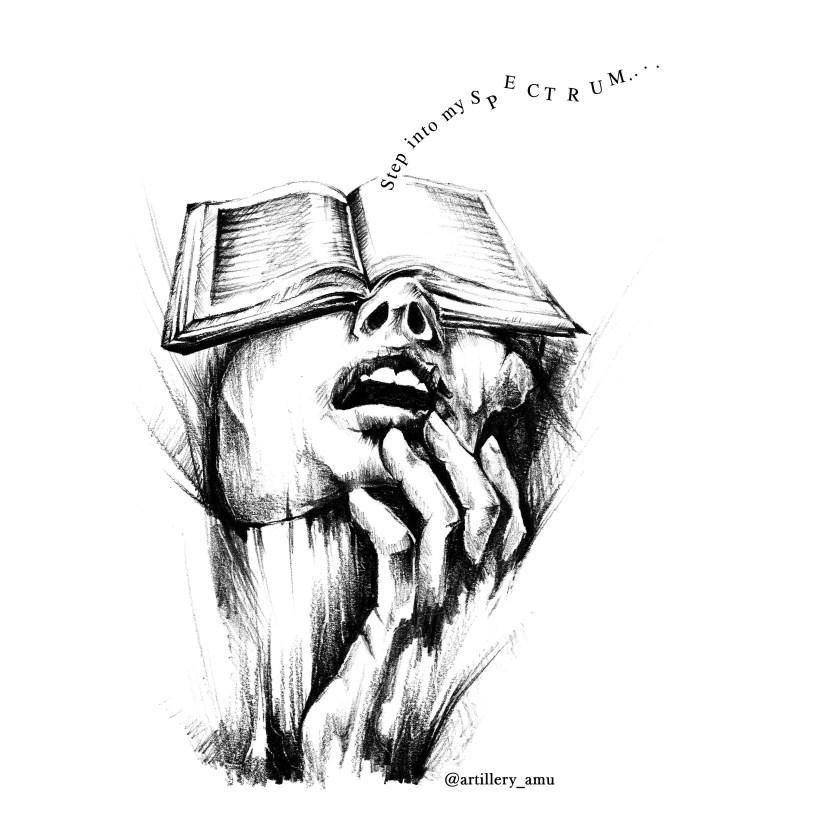
Today, the topic is aggression and agency.

Our sense of agency is foundational to our mental and emotional well-being. It’s not just about taking action—it’s about choosing which action to take.
Read more on agency: Inherent Yet Fragile

To avoid spiralling into reactive behaviour—my own or my son’s—I had to choose my response.
Today, it was to consciously step into my spectrum and understand myself.

When I’m tired, I often feel unsure about how to engage with James, entertain him, or support his learning.
This gets worse when we’re stressed, hungry, hot, or dysregulated.

I try to be consistent, while quietly battling a constant low-level anxiety:

Am I letting him stim too much? Is it helping? Hurting? Should I be doing more? Less?

The Crossroads of Parenting

I’ve been at a crossroads in my thinking for a long time.
I want him to rest.
His life has been full of therapy because I didn’t—and sometimes still don’t—know what to do.
But the more I learn, the better our relationship becomes.

On tough days, though, I feel like I’ve been getting it wrong from the start.
Mistake after mistake.
Those thoughts keep me up at night.
Sometimes crying. Sometimes fighting.

The diary entry from 2021 was an explosion of overwhelm into a screen. It brought back memories of the early COVID-19 pandemic.
I’d had a miscarriage. We’d just moved house. I couldn’t shake the grief. And in the middle of it all, James began to self-injure. He would pinch himself, leaving red and purple marks across his skin.

Studying Inclusion, Feeling the Weight

In 2022, I began studying inclusion.
I was becoming more confident, but also more frequently heartbroken.
It was hard to detach from the raw vulnerability of children’s lives.

I’d been studying for years, but maybe I’d missed the key point.

A Moment of Aggression

It was a hot day. James asked to go down a street we’d never been on.
Our routine was out of sync, Jonathan was travelling, and I was alone.

I said no. It was a busy road, and I was scared.

Thwack, thwack—there goes my head.
Another time, he dug his fingernails into my face and pulled my hair.
Then, moments later, he climbed into my lap and kissed me.

It’s difficult.

I know he is inherently good and that he needs to be taught.
Read more: on Presence not Panic

It’s hard to stay calm—and yes, I get angry too.

I can usually handle it.

The pain subsides. The bruises fad

The regret?
That’s harder to push away.

Forgiveness comes easily.
But I know that I must help him.
If I don’t support him in learning in the way he can, his independence will be limited.

Speaking Openly About the Hard Stuff

With hindsight, I wish the professionals who diagnosed James had found a way to reach me—and treat me at the outset too.

But truthfully, the diagnosis was a relief.
It took away the weight of being labelled a “bad parent.”
And it slowly helped me rebuild my confidence to act as a capable parent.

A diagnosis doesn’t mean despair or unhappiness.
But still, I sometimes wonder if James’s childhood has been less joyful than I wanted for him. Maybe because of all the therapy. The systems. The watchful eyes.

I speak a lot about acceptance on my site. I allow myself to talk openly about the hard times, because I also celebrate our joy.
But sometimes, I still feel paralysed. I feel like an imposter, dependent on medication to keep my brain in balance. Because when depression pulls the metaphorical trigger, it erases all the good and leaves me spiralling.

And I know these things impact James.
They limit my ability to be the parent I want to be.

Step Into My Spectrum

The title of this post comes from one of my favourite T-shirts:
Step Into My Spectrum.

It’s my way of storytelling.
A need to express connection, even without conversation.

This is me, sharing part of my spectrum.
This is part of my advocacy for neurodiversity, for acceptance, for change.

If you’ve found yourself resonating with any part of this, then we’ve connected.
Like listening to a song, passively yet deeply, and finding yourself inside someone else’s story.

It reminds me that emotions are fundamental to being human.
That our experience of life exists on a spectrum, shaped by both nature and nurture.

My brain is also what makes me kind.
Empathetic.
Creative.
Joyful.

And that joy is contagious.
Most importantly, for James.

That’s the type of emotional contagion we need.

Innsaei

Back to today. I decided to trust myself. The Icelandic word for this is innsæi. James didn’t want to go to bed. Not many pre-teens do. I guessed that the day had simply been too full of demands for him. It was a bit difficult at first. We’ve been on a good run lately. But that’s life—ups and downs.

To cut a long story short, he reclaimed a tiny bit of agency.
And so did I.
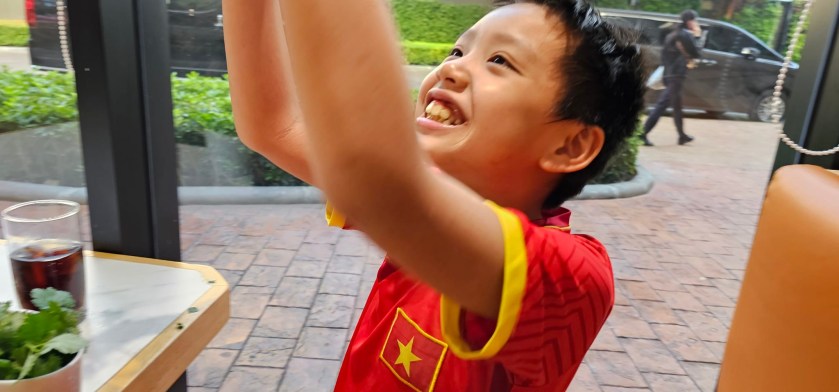
Exploring Identity theories and its impact on James and I

The work of thinkers like Dr. Joanna Grace helps us explore identity not as a fixed label, but as something multi-dimensional, evolving, and deeply connected to experience.

  1. Essentialist Identity: Our Inner, Unchanging Core
  2. Structured Identity: How Our Environment Shapes Us
  3. Performative Identity: Adapting to Social Expectations
  4. Discursive Identity: The Power of Language

Here’s how James and I encounter and navigate these layers of identity:

Essentialist Identity: Our Inner, Unchanging Core

For James and I, our inner light was once dimmed by my struggle to truly understand his being, beyond the challenges of special needs parenting. In the early days of diagnosis and therapy, James was reduced to behaviours and diagnostic labels, which overlooked his true self. Yet, our joy, curiosity, and resilience exist beyond these external interpretations, and I’ve come to appreciate our existence more deeply as we navigate this journey together.

Structured Identity: How Our Environment Shapes Us

James and I are navigating an evolving understanding of a world that sometimes makes us feel different, abnormal, and excluded. The spaces we occupy shape us not only physically, but emotionally and socially as well. Access to disabled toilets, for instance, is a lifesaver for me. It means I can accompany James, who is almost as tall as I am, into the bathroom without being viewed as a potential risk to other children, simply because of his appearance. The environment and acceptance we encounter are influenced by many societal forces: from media representation and public understanding to legislation. These forces intersect to shape children’s growth, behaviour, emotional well-being, and inclusion.

Performative Identity: Adapting to Social Expectations

Performative identity explores how we adjust our behaviour to meet social expectations. Most people intuitively know how to behave in different settings—quiet in a library, more expressive at a party. For neurodivergent individuals like James and me, this social choreography isn’t always natural. When James flaps his hands or withdraws in busy places, it’s not misbehaviour; it’s communication. It’s his adaptive response to environments that don’t always cater to his needs. His actions are his language. Teaching him how to navigate these social scripts takes time, patience, and creativity.

This aspect of performative identity reminds us that we all perform to some extent. We have many roles —businesswoman, mother, sister, teacher, advocate—and the extent to which these roles affect our true selves is significant. Self-worth becomes central to the process of performing, especially when we feel pressured to act in ways that are not inherently true to who we are. For neurodivergent individuals, the process of being taught social skills can sometimes lead to masking, which can result in intense trauma. In these cases, the script needs to be rewritten, allowing for more authentic expressions of self.

Discursive Identity: The Power of Language

Language shapes how we see ourselves and how others perceive us. Words like “disordered,” “special,” or even “different” can unintentionally marginalise neurodivergent individuals. When we reflect on the evolution of language—terms like “retarded” or “spastic” that were once commonplace—we see the damaging impact of these labels, even when they were used with good intentions. For me, the label became James’s identity, and I admit there was a time I lost sight of his true essence. The words we use don’t just describe reality; they shape it. This is why it’s so important to choose our language carefully, to affirm rather than diminish the identities of others.

Phenomenalism: The Embodied Self

For individuals who are non-verbal or express themselves differently, Phenomenalism affirms that their inner world is real and present. Their movements, expressions, rhythms, and reactions are meaningful. These should not be dismissed as mere behaviour, but recognised as communication.

Joanna encourages us to engage with others in ways by learning to listen more deeply to alternative ways of being. Joanna’s work helps us go further. She teaches us not to judge a person’s worth by their physical or verbal capabilities alone. She urges us to understand that identity is a synergy of mind and body.

Beyond Identity: The Evolving Nature of Self

For James and I, our identity is lived through rhythm, repetition, emotion, and connection in tandem. His body is his language, and his sensory world is central to how he experiences and communicates who he is. Through this lens, his being and belonging are deeply tied to his sensory experience. This is why we need more inclusive spaces that recognise and accommodate the diverse ways people experience the world.

We are individuals, but we are also mother and son, and together, we share an embodied identity—one where I am his voice, his gateway to the world.

When we acknowledge that our identity is not fixed but deeply rooted in the present moment, and shaped by lived experiences, we can imagine a world where the environment evolves to accommodate every person’s needs.

Reflections on the work of Joanna Grace and her discussions on identity, being and belonging