
Child Development Through Generational Shifts

Child Development Theories: A Journey Through Time, Society, and Connection
The evolution of child development theories is deeply connected to broader historical, biological, and technological changes that have shaped human societies.

The growing recognition of neurodiversity necessitates an ongoing reimagining of how we parent, teach, and learn. These changes highlight the importance of tools for connection, such as AAC (Augmentative and Alternative Communication), that facilitate and support children’s unique needs, helping them navigate and find meaning in a world that often requires adaptation.

From the early philosophical insights into childhood, through the scientific revolutions in biology and psychology, to the rise of inclusive educational practices and digital learning tools, our understanding of how children grow and develop has become more nuanced and interconnected. AAC, along with the many other frameworks that exist today, will continue to play a critical role in shaping a future where every child’s voice is heard, valued, and respected.

In a society that constantly evolves and challenges traditional norms, it’s critical to appreciate that each child’s developmental journey is unique—with tools like AAC, emotional intelligence, and inclusive education as vital support systems.

The Four-Pronged Approach to Human Development
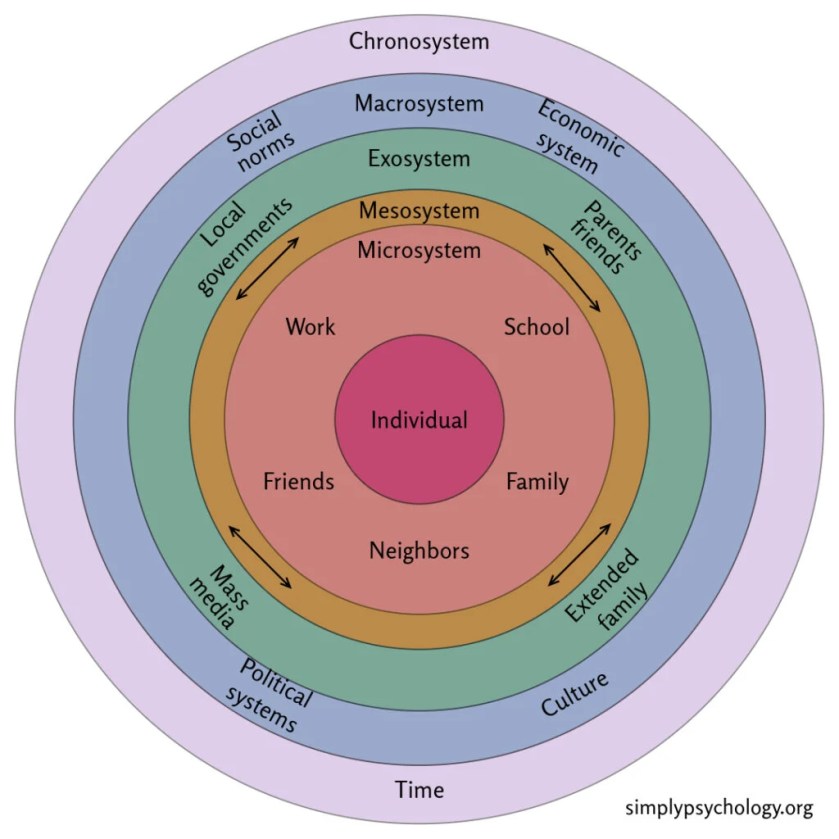
A great way to deepen our understanding of these interconnected factors is by exploring Urie Bronfenbrenner’s ecological systems theory, which outlines how children’s development is shaped by their interactions with different layers of their environment, from immediate family settings (the microsystem) to broader societal and cultural factors (the macrosystem).

A Bio-Psycho-Social-Societal Lens: Understanding the Whole Child

Biological: This focuses on physical growth, brain development, and genetics—basically, the body’s role in development.

Psychological: This covers emotional and cognitive development, how children form identities, and their inner world.

Social: This looks at the immediate environment—family, peers, and community—and how these relationships shape children’s behaviour and skills.

Societal: This examines the broader societal forces—like government policies, education systems, media, and cultural expectations—that influence a child’s opportunities and sense of self.

Stages, Conflicts, and Virtues

Erikson’s theory revolves around stages, conflicts, and virtues. The resolution of these conflicts leads to the development of virtues that serve as strengths throughout life. Below is a table of Erikson’s stages, the conflicts, and the resulting virtues:

Infancy (0-1)

  • Conflict: Trust vs Mistrust
  • Virtue: Hope

Early Childhood (1-3)

  • Conflict: Autonomy vs Shame/Doubt
  • Virtue: Will

Play Age (3-6)

  • Conflict: Initiative vs Guilt
  • Virtue: Purpose

School Age (7-11)

  • Conflict: Industry vs Inferiority
  • Virtue: Competence

Adolescence (12-18)

  • Conflict: Identity vs Confusion
  • Virtue: Fidelity

Early Adulthood (19-29)

  • Conflict: Intimacy vs Isolation
  • Virtue: Love

Middle Adulthood (30-64)

  • Conflict: Generativity vs Stagnation
  • Virtue: Care

Old Age (65+)

  • Conflict: Integrity vs Despair
  • Virtue: Wisdom

Erik Erikson’s psychosocial development theory is an essential framework for understanding how children navigate stages of growth. For neurodiverse children. Milestones such as trust, competence, or autonomy don’t always follow a neat, linear path for every child. For instance, children with autism may develop autonomy and competence in different ways, but they can still achieve these milestones. This is where AAC tools become invaluable. They provide alternative communication methods that allow children to express themselves in ways that are meaningful to them, ensuring that their developmental journey is accessible and inclusive.

Rather than seeing child development as a series of isolated stages or conflicts to be resolved, I believe it’s more helpful to acknowledge, identify, and address them as part of who we are at any given point in time. The goal is not to reach the highest stage of development for all. Personally, I value moments of isolation, as they provide space for reflection and self-awareness. Recognition of our capacity for conflict, resolution, and virtue is circular or even spiky, is my personal key to self-acceptance and self-actualisation.

Child Development Evolution timeline

Era: Pre-Industrial Era (Before 1700s)

  • Biological: Children were viewed as miniature adults, with no clear distinction for childhood.
  • Psychological: Emotional and cognitive development were overlooked; children worked from an early age.
  • Social/Societal: Family was central, education was minimal, mostly religious.
  • Key Philosophers & Thinkers: John Locke: “Blank Slate” theory (Tabula Rasa); Jean-Jacques Rousseau: Advocated for natural development, childhood as a time of freedom.

Era: Industrial Revolution (Late 1700s – 1800s)

  • Biological: Urbanisation led to public health advancements but increased exposure to illness.
  • Psychological: Darwin’s evolutionary theory reshaped understanding of human development.
  • Social/Societal: Progressive education emerged, with Dewey promoting experiential learning. Froebel introduced kindergarten. Child labour laws emerged; schooling systems expanded beyond religious institutions.
  • Key Philosophers & Thinkers: Charles Darwin: Theory of Evolution and Natural Selection; John Dewey: Progressive education and experiential learning; Friedrich Froebel: Founder of kindergarten, play as essential to development.

Era: Early 20th Century (1900s – 1950s)

  • Biological: Medical advances improved child health.
  • Psychological: Freud and Piaget revolutionised early childhood understanding. Freud’s psychoanalysis and Piaget’s cognitive stages shaped modern developmental psychology.
  • Social/Societal: Increased focus on early childhood education, with psychological theories influencing schooling.
  • Key Philosophers & Thinkers: Jean Piaget: Stages of cognitive development; Lev Vygotsky: Social-cultural theory, Zone of Proximal Development (ZPD).

Era: Late 20th Century (1960s – 1990s)

  • Biological: Advances in neuroscience and genetics led to recognition of developmental disorders.
  • Psychological: Erikson’s psychosocial stages highlighted identity and emotional growth.
  • Social/Societal: Focus on mental health, identity, and inclusion in educational settings.
  • Key Philosophers & Thinkers: Erik Erikson: Psychosocial stages of development; Jerome Bruner: Scaffolding, the role of social context in learning.

Era: 21st Century (2000s – Present)

  • Biological: Neuroplasticity and neurodiversity shape modern approaches to child development. Advances in medicine means those with Profound, Multiple and/or Complex Learning Disabilities are thriving beyond previous expectations.
  • Psychological: Emotional intelligence, as defined by Goleman, becomes a key developmental focus.
  • Social/Societal: AAC tools and inclusive education policies ensure developmental equity for all children.
  • Key Philosophers & Thinkers: Daniel Goleman: Emotional intelligence; Norman Doidge: Neuroplasticity, the brain’s ability to adapt; Stephen Hawking: Advocate for neurodiversity and inclusion.

Generation Overview, Impact and Mental Health

The generational shifts highlighted illustrate how the understanding of mental health, diagnoses, and special educational needs has transformed over the past century. This progression demonstrates how societal forces like economic conditions, media exposure, and technological advancements intersect to shape how we view children’s growth, behaviour, and emotional well-being.

The Role of AAC in Supporting Child Development

AAC tools as a tool for connection and inclusion enable us to go beyond teaching children to communicate more effectively. We are empowering them to navigate the world with empathy, understanding, and a deep sense of their own value. This aligns perfectly with Maslow’s view that self-actualisation comes not from achieving a singular, predefined goal, but from the freedom to express who we are and connect meaningfully with others.

AAC tools, whether they are high tech, low tech or no tech, are not just about learning or meeting educational requirements; they are tools for connection, transcending the national curriculum to create more meaningful relationships.

Maslow’s Hierarchy of Needs: Facilitating Self-Actualisation

Maslow believed that once our basic physiological and psychological needs—such as food, safety, belonging, and esteem—are met, we can then move toward fulfilling our fullest potential, which is self-actualisation.

For children with communication challenges, AAC tools serve as a bridge between meeting these foundational needs and realising their fullest potential. The ability to communicate freely and connect with others is crucial to fulfilling the need for belonging, which is the foundation of Maslow’s theory.

AAC doesn’t just facilitate communication; it promotes a different style of learning—one that places empathy at the forefront.

Chemical Exposure and Sustainability

In parallel with the rise of diagnoses and special educational needs, there has been growing concern about the impact of modern diets and chemical processes on mental health. The mass production of food, with an emphasis on processed ingredients, artificial additives, and high levels of sugar, has been linked to various developmental and mental health issues in children.

Increased exposure to chemicals such as plastics, pesticides, and artificial additives in food production has raised concerns about their effects on children’s neurological and cognitive development. Some studies suggest that exposure to these chemicals can lead to developmental delays, attention issues, and increased vulnerability to mental health conditions like anxiety and depression.

The increasing focus on mental health and special educational needs has led to significant changes in how children are supported in educational systems. Special education provisions have expanded greatly, with a growing understanding that children with neurodiverse conditions such as autism, ADHD, and dyslexia are not “broken,” but rather have different ways of experiencing and interacting with the world.

As we shift towards a more eco-conscious and sustainable future, the question becomes: how do we foster a world that nurtures children’s development in all aspects—biologically, emotionally, socially, and environmentally? As we address sustainability, it’s not just about saving resources or reducing waste—it’s about creating a world where children’s neurodiverse needs are understood, supported, and respected.

Call to Action

I’d love to hear your thoughts! Please share your experiences or reflections on how child development has changed across generations. How do you think these shifts will impact the next generation?

Reflecting on my own parenting journey and considering the influence of mass media and societal tools like parenting guides and Augmentative and Alternative Communication (AAC), it is clear how these tools and philosophies shape not only how we guide children but also how we understand their uniqueness in relation to their environment.

I think key to it all is the realisation that we all experience these virtues differently, depending on our position, stance, and outlook. This has a profound impact on how we understand neurodiversity and teach children. We are a product of a society that has imposed specific ideas, but we are also part of a society that challenges them.

Agency, inherent yet fragile

Anxiety and agency are two concepts deeply entwined in our daily lives.

Our sense of agency is foundational to our mental and emotional well-being. It’s not just about taking action—it’s about choosing which action to take. Agency is about exerting influence over our environment and shaping our responses to the world around us. It’s an inherent part of being human, like sight, taste, and touch. However, like any other ability, agency can be impaired. Just as a physical impairment to one of our senses can disable us, losing agency can cause significant distress. This can result in burnout, anxiety, or even depression.

Anxiety is often that weight on our shoulders. It is a feeling of unease, worry, or fear about events that are about to happen. It might happen. Anxiety can be a natural response to stress. Sometimes, it signals that the body needs attention.

Agency, on the other hand, is our ability to make choices and exert control over our lives. It’s about taking action and feeling empowered to influence the outcome of events.

Fragile, yet inherent. When these two concepts collide, things can get complex. Anxiety can diminish our sense of agency, making us feel powerless and overwhelmed.

Reclaiming Agency: A Key to Mental Well-Being

Anxiety and burnout affect our well-being. Anxiety—particularly chronic anxiety—can significantly impact our ability to make decisions. It can also hinder us from taking meaningful action. In my own experience, I find that my sense of agency fluctuates. This is true both as an individual and as a parent/agent to my son James. It changes based on external stressors. The demands on me can feel overwhelming, and when burnout sets in, my ability to act diminishes dramatically. Click here to read my personal account of burnout.

Many neurodivergent individuals face this struggle. It is a continuous cycle of anxiety, stress, and exhaustion. This cycle ultimately leads to burnout. The resulting fatigue makes it hard to engage in self-care. It also makes it hard to rest or participate in social engagement. Over time, these unaddressed stressors can erode our sense of agency, leaving us feeling stuck and powerless.

The key to reclaiming agency is recognising our triggers. We need to allow ourselves time to recover, reflect, and reconnect. It is important to do this before we face the challenges ahead. It’s important to remember that this cycle doesn’t just apply to individuals; it affects entire communities.

The Cyclical Nature of Anxiety and Burnout

Prolonged anxiety can impair decision-making and worsen mental health, eventually leading to burnout or depression. This cycle isn’t just an individual struggle—it’s one that affects many people in the community, carers and teachers alike. The relentless pressure of unmet needs and demands can cause a profound sense of helplessness. This is especially true when it feels like there’s no time to step back and reset.

I often think of Virginia Woolf’s description of anxiety, where time feels so unbearable that survival seems impossible. These feelings aren’t new or uncommon, particularly among individuals who identify as neurodivergent. Anxiety and burnout can take a toll. They create a state where the ability to act feels paralysed. Even the smallest decisions seem monumental.

Strategies to Reclaim Agency and Overcome Anxiety


Action-based storytelling focuses on what actions we take to improve a situation. It avoids perpetuating a narrative of hopelessness. In the context of climate change, we can change the conversation. We can move away from impending doom and highlight stories of action. These can empower us to see a path forward and remind us that we can make a tangible difference.

Action-Based Storytelling and Engaging in Collective Action

Focusing on actions we’re already taking can be beneficial. This includes activism, sustainable practices, or little things like using a reusable straw when we can. These actions can help us feel that we are actively contributing to change.

Collective action helps individuals feel less isolated in their struggles and provides a sense of shared agency. This could be through online groups, social media platforms, or in-person meetups. For example, I’m learning Makaton. I am inviting others to join me. This amplifies our shared messages around inclusion. It also supports the well-being of children like my son, as well as other families.

Click here to read my summary of the Mental Elf podcast. The podcast discusses agency and action-based storytelling. It also covers anxiety and collective action from a psychological and climate-based perspective.

The Oldies and Goodies: Tried-and-Tested Techniques We Often Forget

  • Let Go: In times of burnout or anxiety, it’s crucial to simplify and focus on the essentials. Prioritise what really matters: nutrition, relationships, rest, and recuperation. By doing this, we create space for recovery without the weight of unnecessary demands.
  • Reflect: Identifying the triggers—both external and internal—that contribute to feelings of anxiety or burnout is a vital step. Taking time to reflect on your emotional and physical states can help you spot patterns and avoid further overwhelm.
  • Rest: Rest is not a luxury—it’s a necessity. For neurodivergent individuals, the mental and emotional toll of continuous anxiety and stress can be unsustainable. Regular rest is essential to restoring a sense of agency. You can achieve this by engaging in hobbies, spending time with loved ones, or simply taking a break.
Remembering Our Agency in a Challenging World

Our agency is at the heart of our mental and emotional well-being. It allows us to make decisions, take action, and feel empowered in an uncertain world. Anxiety, burnout, or eco-anxiety can strip us of this sense of agency. We may feel powerless in such situations.

The path to reclaiming our agency lies in recognising the importance of rest and regulation. It also involves engaging in action-based storytelling and participating in collective action. By doing so, we can ensure that we make meaningful progress. We can do this without sacrificing our mental health. Rebuilding our agency—whether individually or collectively—helps us take control of our lives and move toward a more sustainable, empowered future.

‘Eco-Anxiety to Agency – mental health in the age of climate change’

A Reflection Upon the Mental Elf Podcast: Dr. Elizabeth Marks and Dr. Chris De Meyer

Climate change is one of the greatest existential threats of our time. Its impacts are increasingly being felt not only in the environment but also on our mental health. As the climate crisis continues to unfold, eco-anxiety—anxiety related to environmental degradation—has become recognised in populations causing significant personal distress. This anxiety impacts how we think and feel. Its intensity varies depending on factors such as where we live, our social position, and the media we consume.

The Media’s Role in Climate Anxiety: Fear vs. Hope Messaging

Fear-driven messaging has been prevalent for decades, but this approach can escalate anxiety, leaving us feeling overwhelmed and powerless. Fear can provoke an emotional response but often without clear actionable steps, can lead to paralysis or disengagement.

On the other hand, hope-driven, compassionate messaging can inspire positive change. A global survey of 10,000 children and young people found that many respondents experienced sadness. Over half of them felt despair due to the ongoing climate crisis. But when these messages included a clear call to action—emphasising collective efforts and solutions—responses were far more positive.

For example, Greta Thunberg’s media presence has ignited youth activism by offering a pathway for action, empowering individuals to contribute. Her presence embodies how agency in climate action helps reduce feelings of helplessness and eco-anxiety.

Brain Development & Messaging: The Impact on Youth

Adolescents are particularly vulnerable to media’s impact. This is especially true for those between the ages of 10 and 15 during their critical period of brain development. Negative or fear-based messaging can worsen eco-anxiety in young minds and influence how they perceive their future. A steady stream of doom-and-gloom content without solutions can contribute to long-term mental health struggles. Instead, it’s essential to provide hopeful, action-driven narratives to help young people build resilience.

Building Resilience in Youth: Validating Emotions and Balancing Activism

Validating emotions is one of the most important aspects of building resilience in the face of eco-anxiety. Rather than dismissing feelings of anger, fear, or sadness, we should acknowledge them as legitimate responses to climate change. This approach empowers young people to advocate for change while protecting their mental well-being.

Dr. Marks and Dr. De Meyer emphasise the importance of self-care and balance in climate activism. If we’re emotionally drained from engaging with the overwhelming reality of the climate crisis, we risk burnout. Taking time to engage in restorative practices is vital.

Fear, Loss, and Perspective: The Need for Empathy

Chronic fear of climate change can become overwhelming, but it’s essential to recognise that eco-anxiety is a rational response to the ongoing environmental collapse. Fear doesn’t need to be pathologised—rather it should be understood as part of a collective societal issue.

For example, communities facing direct climate effects—such as floods, wildfires, or hurricanes—often experience heightened psychological distress. The real fear and impact of loss—of home, health, and income—amplifies eco-anxiety. It is crucial to address the economic and mental health needs of these communities to help them heal and rebuild.

Empowering Agency: Turning Anxiety into Action

Inspiration from History: Social movements highlight the power of collective action. They include gender equality, disability rights, and racial justice movements. These movements empowered marginalized communities. Similarly, we can draw strength from history for our climate and neurodiversity awareness activism. By working together, we can build resilience in our communities and address the current climate of crisis.

The neuroscience of agency suggests that a sense of control and empowerment is key to overcoming eco-anxiety. When individuals see their actions having an impact, it reduces feelings of helplessness. Small acts—whether it’s reducing waste, supporting eco-friendly businesses, or advocating for climate policies—reinforce the power of individual action.

The Power of Action: Transforming Fear into Collective Impact

Dr. Marks and Dr. De Meyer underline the power of collective action in mitigating climate change. Actions such as reducing fossil fuel consumption create a shared purpose. Also, protecting natural ecosystems and adapting to extreme weather events contribute to this. Participating in these actions can significantly reduce feelings of helplessness. Retelling these stories reduces eco-anxiety. They impact our own actions.

Key Takeaways:

  • Eco-anxiety is a natural response to the climate crisis, but we can combat it through hope-driven messaging and collective action.
  • Fear-based messaging alone isn’t enough to inspire change—action-oriented messages motivate lasting change.
  • Empowering individuals and communities through agency—even through small steps—helps reduce eco-anxiety and brings a sense of purpose.
  • Validating emotions and promoting self-care can help us maintain mental health while engaging with climate issues.

The Mental Health Crisis: Is It Really an Epidemic?

The growing number of diagnoses, particularly in Western societies, has coincided with a global rise in mental health problems. According to the World Health Organisation, mental health disorders are now the leading cause of disability worldwide, with conditions like depression, anxiety, and psychosis becoming more prevalent. This increasing trend has been described as a “mental health epidemic,” but is it truly an epidemic of mental illness, or is it more about the way we have come to understand and categorise mental distress?

The sharp rise in diagnoses cannot solely be attributed to an actual increase in mental health problems. The growth of the mental health industry, has created a system in which many individuals are identified as having disorders, even when their experiences may not be pathological in the strictest sense. It’s possible that these tools have created a self-fulfilling prophecy, where people who might have otherwise adapted to challenges in their lives are now labelled as “sick” and in need of treatment.

In many cases, the over-categorisation of human emotion and behaviour risks turning normal human experiences—such as grief, stress, or anxiety—into clinical conditions. This can make people feel as though they are constantly battling mental illness, even when their symptoms may be part of the natural human condition.

Over-Categorisation and the Medicalisation of Human Nature

As psychiatric diagnostic tools have become more refined, the scope of what is considered a mental health disorder has expanded. Normal human experiences such as anxiety, sadness, or stress—common reactions to life events like a job loss or the death of a loved one—are increasingly being labelled as clinical conditions. The fine lines between what constitutes normal psychological distress and what qualifies as a diagnosable disorder are often blurred.

In fact, the DSM-5 has faced criticism for contributing to the over-diagnosis of relatively minor or transient conditions. For instance, what was once considered a natural response to grief, such as sadness after the loss of a loved one, can now be diagnosed as major depressive disorder if it persists for a certain length of time. Similarly, the increasing number of disorders in the DSM-5 has led to concerns about pathologising normal human behaviour. Conditions like generalised anxiety disorder or attention-deficit hyperactivity disorder (ADHD) may be diagnosed even when symptoms do not meet the clinical threshold, leading some to question whether psychiatry is over-complicating what are essentially variations of human experience.

This trend towards over-diagnosis is not just an issue for the individual, but has wider societal implications. When everyday experiences are medicalised, individuals may begin to see themselves as inherently “broken” or diseased, rather than recognising that their struggles are part of the complex fabric of being human. This pathologisation can also lead to unnecessary treatment, with people turning to medication or therapy for what might simply be a temporary emotional response.

The Need for a New Paradigm in Psychiatric Research and Practice

Given these concerns, it is clear that the field of psychiatry is at a crossroads. The historical foundations laid by Kraepelin were vital in moving psychiatry toward a more structured, scientific understanding of mental illness. But as diagnostic tools have become more detailed and comprehensive, we must ask whether we’ve reached a point where standardisation has gone too far, leading to an over-medicalisation of everyday human struggles.

The current mental health crisis calls for a shift in perspective. Instead of focusing solely on labels and diagnostic criteria, we need to look more holistically at the causes of mental distress. Environmental factors, social isolation, economic instability, and the impact of climate change are critical components that cannot be ignored. Mental health must be understood not just as a set of symptoms to be categorised and treated, but as a complex interplay of biological, psychological, and social factors.

Kraepelin’s Legacy: The Birth of Psychiatric Classification

Emil Kraepelin is widely regarded as the father of modern psychiatric classification. His work in the late 19th and early 20th centuries marked the beginning of a systematic approach to understanding and categorising mental disorders. Kraepelin introduced the concept of longitudinal observation, classifying mental illnesses not just by their symptoms, but by their course over time. His descriptions of conditions like schizophrenia and bipolar disorder are still influential today.

However, Kraepelin’s methods were based on clinical observation and lacked the statistical tools and diagnostic criteria that we now use. His classification system was relatively broad. It relied on subjective assessment and description. Consequently, it was more prone to variation. It was also less reproducible than modern systems. Moreover, Kraepelin’s view of mental illness as a form of biological degeneration has been largely debunked. Advances in neurobiology and genetics prompted this change. Contemporary research, such as that led by Professor Robin Murray, has shifted the understanding of psychosis and other disorders from a purely biological model to one that considers genetic predisposition, environmental stressors, and socio-cultural factors.

Despite its limitations, Kraepelin’s pioneering work laid the foundation for the DSM (Diagnostic and Statistical Manual of Mental Disorders). It also laid the groundwork for the ICD (International Classification of Disease). Psychiatric diagnostic tools have evolved over the years. The classification of mental disorders has become increasingly standardised. It has also become increasingly complex. These developments have allowed for clearer communication. They have also improved treatment protocols. However, they may have led to the overcomplication of human nature. This has fueled a mental health crisis. Many are questioning whether we have over-medicalised the human experience.

These standardised systems have undoubtedly improved diagnostic accuracy. They have also improved communication among healthcare providers. However, they bring their own set of challenges, particularly in the context of the mental health crisis we face today.

Conclusion: From Kraepelin to Today – Rethinking Mental Health Diagnosis

By over-categorising human experience and medicalising normal emotional responses, we risk turning ordinary human struggles into clinical conditions, exacerbating the very mental health crisis these tools were designed to address.

As we move forward, we propose a more balanced approach. This approach respects the complexities of human experience. It also ensures that serious mental health conditions are properly diagnosed and treated. The challenge is to develop a mental health framework that promotes well-being. It should reduce the stigma of seeking help. Additionally, it must foster a deeper understanding of the socio-environmental factors that contribute to mental distress. Ultimately, we need a new paradigm for understanding psychiatric challenges. This new paradigm should value neurodiversity and human complexity. It must support holistic treatment and provide a more compassionate, less pathologised view of mental health.