
I’ve been reflecting on the term Gestalt Language Processing (GLP) and how I wish someone had explained it to me years ago. Despite more than a decade of therapy with my son James, the term was never specifically brought to my attention. Perhaps for various reasons. But it’s so crucial that I now believe everyone — especially parents, teachers, and therapists — should know it.
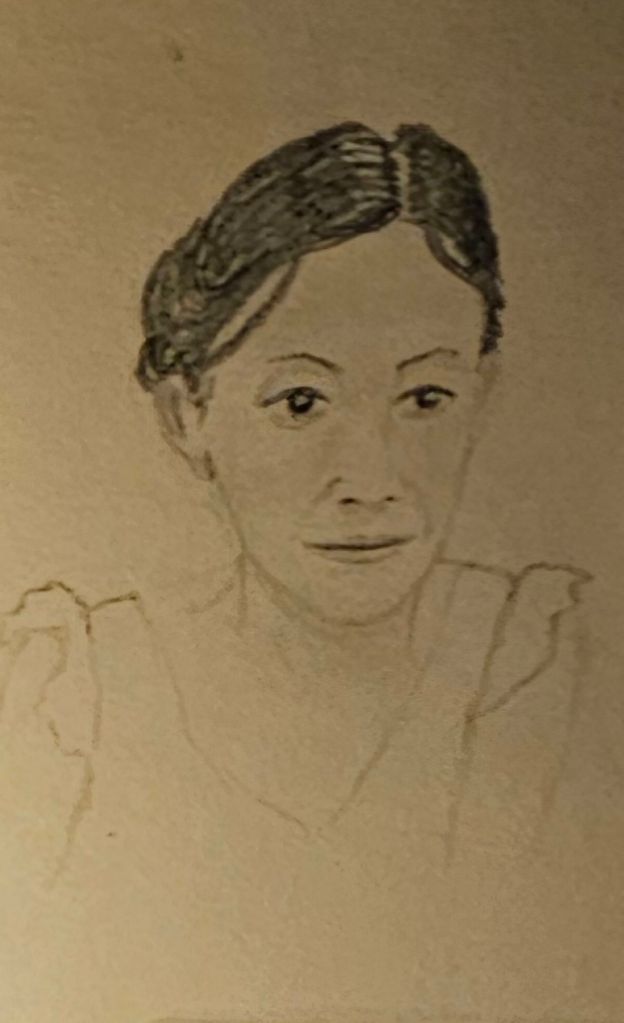
As James’ mum
It’s my job to look and listen.
Not just with my eyes and ears, but with my heart and soul.
Not just for words, but for meaning.
Not just for learning, but also for feeling.
- What Does Gestalt Mean?
- Learning styles, simplification, mnemonics and memorability
- Echolalia and the Misunderstood Message
- A Cultural Example: Rain Man
- Understanding James, Understanding GLP
- Against Deficits, For Understanding
- Gestalt, in broader contexts
- Further Reading and Resources
What Does Gestalt Mean?
We all contribute to the human Gestalt. It is our shared responsibility to make sure everyone feels part of it. As whole people. As part of a shared humanity that values people as equal, different and not less.
The word Gestalt comes from German, meaning “shape” or “form”. You might not hear it often in everyday conversation. That’s normal — specialist language tends to remain within professional circles such as speech and language therapy or medicine. Much like terms such as sensory processing disorder or neurodiversity, we often only learn them when we need to. But Gestalt is one of those vital, essential words we should all know.
So I write this blog in the earnest hope that someone else — perhaps a parent just beginning their journey — finds the clarity and hope this understanding has brought me.
As I continue to learn, I’ll continue to write and update my blog posts.
Learning styles, simplification, mnemonics and memorability
When trying to understand or explain something complex, I use simple comparisons. These include similes, metaphors, or symbols. I use any approach that helps make it memorable.
So here’s how I explain Gestalt Language Processing:
Gestalt Language Processing is greater than both the individual words AND the sum of the words or sounds used.
Using basic mathematical notation:
| Gestalt Language Processing ≥ | the sum of its parts (words) |
| GLP ≥ | Σ (individual words) |
And importantly:
| Neurodiversity > | the sum of its diagnostic parts |
Neurodiversity is greater than the sum of diagnostic labels, attributes and the way they communicate. The individual is more than any one label. Neurodiversity is the whole person.
Key:
| ≠ = not equal to | = = equal to |
| ≥ = greater than or equal to | ≤ = less than or equal to |
Gestalt Language Processing is not the same as typical language learning (known as Analytic Language Processing). It differs from learning and using words one by one. It’s about how some people absorb chunks of language — phrases, tone, even lines from films — and use them to communicate meaning. It’s not merely random repetition or what might be labelled as vocal stimming or self-stimulation.
| GLP ≠ Analytic Language Processing | GLP is not the same as analytic language processing. |
| GLP ≠ Random Repetition | GLP is not random repetition. |
| GLP = Meaningful Language Chunks | GLP involves meaningful units of language. |
| GLP > What It Seems | GLP is more than it appears to be on the surface. |
The message often lives in more than just what is being said. That message is in the Gestalt. It encompasses the whole being of the person, the form it takes, and the environment that shapes it. It is not only in the parts of their language or behaviour we can easily see or interpret.
This is why the message is often greater than it may first seem. This is key to finding the meaning. It helps support the learner to develop more meaning in their communication attempts. Using alternative and augmentative communication techniques (AAC) can facilitate making their lives easier.
Echolalia and the Misunderstood Message
If you’ve heard of autism, you may also have come across the term echolalia. It refers to when a child repeats a word or phrase, seemingly out of context. It might appear random, even meaningless. But it isn’t. Echolalia is often a clear sign of Gestalt Language Processing. The repeated phrase isn’t just a copy. It’s a meaningful unit. We may simply not yet understand its full significance.
For years, I didn’t consider James to be a Gestalt Language Processor. This was because he didn’t have “words” in the traditional sense. He didn’t repeat lines from television or use set phrases. But he did, and still does, make sounds, use intonation, and produce strings of vocalisations that don’t appear to make sense.
Recognising GLP involves more than just spoken words. It is crucial for understanding how many people with disabilities may be trying to communicate. Some children, like my son, process language gesturally. They may also communicate through vocalisations that may sound unintelligible. However, they likely carry deep, personal meaning.
A Cultural Example: Rain Man
In the 1988 film Rain Man, Raymond (played by Dustin Hoffman) is portrayed as a man who frequently repeats lines from television and past conversations. At the time, these behaviours were seen as curious or even comical — part of the “savant with quirks” stereotype. As a 10-year-old watching the film, I didn’t understand what was really happening. Now, I can see that Raymond was likely a Gestalt Language Processor — using stored scripts to express thoughts and emotions.
While Rain Man was groundbreaking in raising awareness, it also simplified or misrepresented the richness and diversity of neurodivergent communication. Today, we know better — so we can do better.
Understanding James, Understanding GLP
Since learning about GLP, I now understand that James — a non-speaking Gestalt Language Processor — is communicating all the time. His vocalisations, intonations, facial expressions, and gestures (what I now affectionately call his “gjesters”) are his way of forming meaning.
His brain doesn’t retrieve or process language in the typical way. This isn’t a failure — it’s just different wiring, likely related to neurological differences in areas such as the basal ganglia. For him, spoken language is like a stormy sea. There’s no bridge, no path laid out — but he is wading through, sound by sound, expression by expression, building his own way to the shore.
Against Deficits, For Understanding
You may read my posts and think I’m anti-labels or sceptical of diagnostic tools — and yes, to an extent, that’s true. I believe we need knowledge, language, and evolving frameworks to help our children. But I push back against deficit-based labels — the kind that reduce children to categories of what’s “wrong” with them.
We’ve moved on from outdated terms like handicapped because we recognised how language shapes perception and inclusion. I hope we can keep evolving — towards a framework that respects the Gestalt of neurodiversity.
Gestalt, in broader contexts
From a linguistic perspective, the word Gestalt reminds me of “gesture,” and the ending “-alt” feels like “halt” — a blocked gesture. This reflects how many children’s communicative attempts are disrupted by neurological barriers. That’s where Augmentative and Alternative Communication (AAC) becomes vital — to help work around these blocks.
In psychology, Gestalt theory is all about the whole: perception, behaviour, motivation, and connection. It sees the mind in a holistic view, for example more than the brain, blood and tissue that make up the organ, the body and the person. This is essential in how we understand neurodivergence.
And in the humanities? We might say this:
There is always more to a person than what meets the eye. The Gestalt of humanity is neurodiversity, and the sum of a person is more than what can be seen — or boxed into diagnostic categories.
As Dr Barry Prizant writes in Uniquely Human, our job is not to fix people — it’s to understand and support them.
Further Reading and Resources
- www.meaningfulspeech.com — practical guidance, training and tools
- What is AAC and how can it support all learners?
- Research & Resources on Gestalt Language Processing
- What is Analytic Language Processing?
- Understanding Stimming vs GLP – tbc
 I am James' mum