This blog features the work of Dr. Joanna Grace from the Sensory Projects
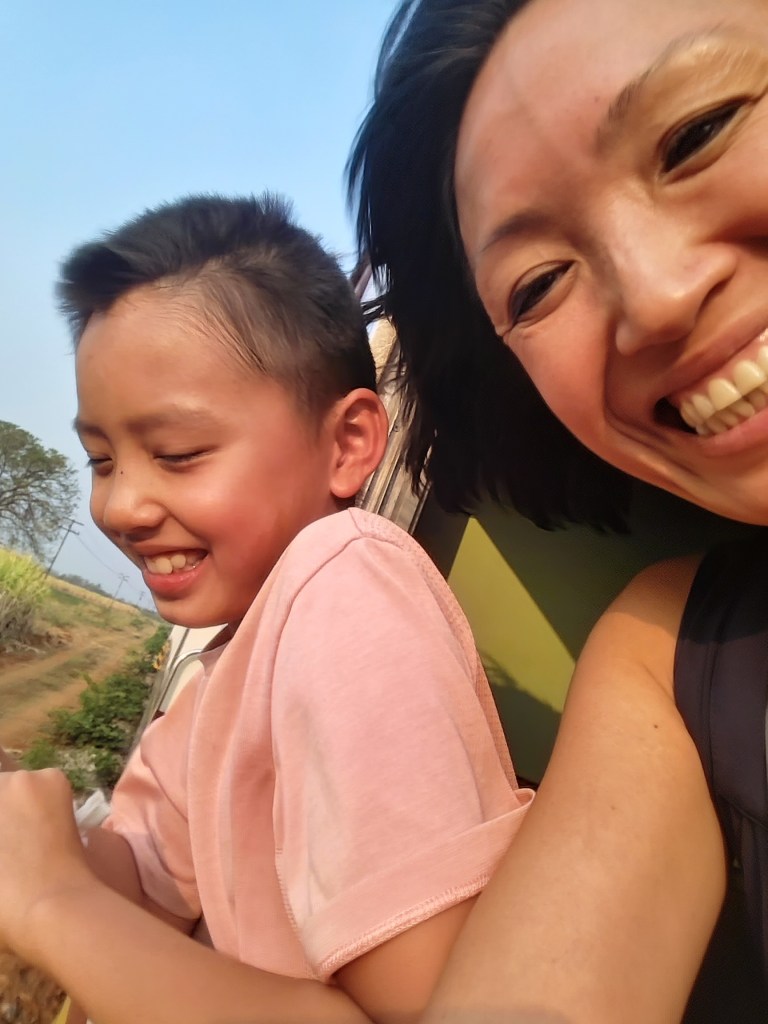
Embracing identity with James
Through my disability inclusion studies, I learn more about people like us in the world around us. I find that a new approach to longstanding beliefs is necessary. As such, I advocate for celebrating neurodiversity and exploring fresh ideas to share experiences and find support.
Our identity is shaped by our thoughts and how we experience the world through our senses. Sensory substitution explains James’s heightened senses. His reactions—whether calming or overwhelming—are his way of communicating. Sensory substitution occurs when one sense compensates for another when overloaded, allowing information to be processed differently. Co-regulation is another key concept, where we support each other in managing emotions. Understanding and responding to James’s cues, I can help him feel more settled. I’ve noticed how my responses can help us stay calm and connected.
The Neurodiversity Movement
The neurodiversity movement is a paradigm shift and an essential movement happening now. It’s a global movement to reduce the stigma around neurodivergent brains.
Neurodiversity embraces the idea that neurological differences are simply variations of the human brain. This shift is crucial for people to be valued for their unique ways of thinking and being.
The Layers of Identity
I recently watched Joanna Grace’s discussion on identity, which sparked reflections on my experiences with James.
Joanna Grace offers a powerful framework for understanding identity through five key paradigms:
- Essentialist Identity: Our inner, unchanging core.
- Structured Identity: How our environment shapes us.
- Performative Identity: Adapting to social expectations.
- Discursive Identity: The power of language.
- Beyond Identity: The evolving nature of self.
Joanna’s work has deepened my understanding of the identity that James and I embody as mother and son. Her frameworks show that the idea of identity is multi-faceted. Understanding of disability and neurodiversity is evolving. It is shaped by new knowledge and perspectives.
Embodied Identity: Recognising True Value
Joanna’s concept of embodied identity encourages us to look beyond physical limitations and recognise the true essence of each individual. This is especially important for those with profound and multiple learning disabilities (PMLD) and individuals with complex learning and developmental needs (CLDD), like James. In essence, I am James’s voice to the world, and our identities are intertwined—we cannot exist without each other. To help us better understand this, Joanna introduces two contrasting philosophical lenses: phenomenalism and Cartesian dualism.
We must look beyond surface assumptions. Just because a body behaves differently, we cannot assume that the mind within is absent or lacking. Each person has an inner life, a sense of being, a light that deserves to be seen.
Phenomenalism: The Embodied Self
Phenomenalism proposes that mind and body are not separate but deeply interconnected. It is rooted in phenomenology, a philosophy that centres on lived experience. In this view, consciousness is always embodied—we experience the world through our bodies.
For individuals who are non-verbal or express themselves differently, this view affirms that their inner world is real and present. Their movements, expressions, rhythms, and reactions are meaningful. These should not be dismissed as mere behaviour, but recognised as communication.
Joanna encourages us to engage with others in ways by learning to listen more deeply to alternative ways of being.
Cartesian Dualism: Mind and Body as Separate
In contrast, Cartesian dualism, developed by René Descartes, separates mind and body into distinct parts. Descartes famously wrote, “I think, therefore I am”, suggesting that thinking and reason are the core of identity.
This idea has had a lasting influence. It has often led society to value people based on their ability to think and communicate in conventional ways. For someone like James, this can be limiting.
Joanna’s work helps us go further. She teaches us not to judge a person’s worth by their physical or verbal capabilities alone. She urges us to understand that identity is a synergy of mind and body.
Moving Toward a More Inclusive Future
Our responsibility is to create environments where everyone’s light can shine. Identity is shaped by experience, environment, language, and interpretation.
All individuals deserve the same rights to love, care, and fulfillment. Disability should never diminish their humanity. Ultimately, it’s about observing and understanding who we are and how we behave—creating a space where we feel understood and connected. In an inclusive future, every person is recognised, understood, and supported for who they are.
 I am James' mum