The shift towards neurodiversity acceptance is a crucial step in recognising and valuing cognitive diversity.
Overlapping Characteristics of Neurodiverse Conditions
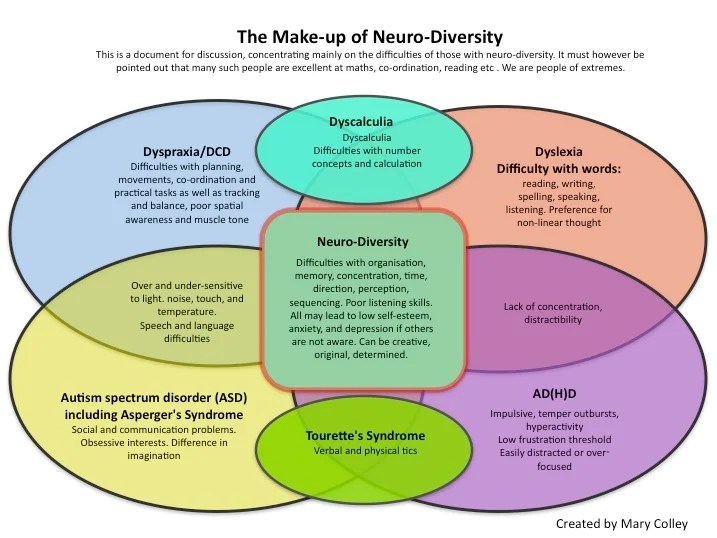
Neurodiverse conditions often overlap, and individuals may experience multiple learning differences. For example, dyslexia involves reading difficulties or differences. It may co-occur with dysgraphia, which refers to writing difficulties or processing differences. Dyslexia might also co-occur with dyspraxia, which involves motor coordination difficulties. Understanding these overlaps as processing differences and similarities can lead to more comprehensive and effective support strategies.
Research and Evidence-Based Practices
Research indicates that many neurodiverse conditions have a biological basis involving genetics, neurology, and neuroplasticity. Early identification of motor differences and other neurological factors can support positive outcomes. It is important to rely on evidence-based practices and consult credible sources to ensure the effectiveness of interventions and accommodations.
Building Supportive Communities
Creating spaces where neurodiverse individuals can connect and support each other is essential. Online forums and support groups offer valuable opportunities for sharing experiences and strategies. This peer support is crucial for fostering a sense of belonging and mutual understanding.
Building Supportive Practice
Positive Approach and Inclusive Education: Adopting a positive attitude towards neurodiversity can foster a more inclusive educational environment. Simple accommodations in schools and communities can significantly improve the educational experience for neurodiverse individuals. Examples include visual timetables, Makaton sign language, and voice output communication aids.
Collaboration Between Teachers and Therapists: A collaborative model can greatly benefit neurodiverse children. Teachers work closely with therapists to create effective support systems. This model ensures that educational practices are holistic and tailored to individual needs. The Swiss educational model includes Special Educational Needs Coordinators (SENCOs) in classrooms. It exemplifies effective collaboration.
Augmentative and Alternative Communication (AAC): AAC tools are essential for individuals who face challenges with spoken communication. These tools include speech-generating devices and eye-tracking technology. These tools not only aid communication but also support learning and social interaction. Universal integration of AAC can enhance inclusivity and recognition of diverse communication abilities.
I also propose an Integration of Inclusive Information, Communication, and Technology (IICT). Incorporating IICT into curricula encourages collaborative learning. It enhances technological proficiency. This approach highlights diverse learning methods. It uses technology to support all students, including those who are neurodiverse.
Further Reading and Resources
The Mary Warnock report champions the principle of inclusive education but with a nuanced understanding of various needs. It advocated for integrating students with special educational needs into mainstream schools. However, it recognised that full inclusion might not be suitable for every student. (link to Profound and Multiple Learning Disabilities, PMLD.
The document has the official title Special Educational Needs: Report of the Committee of Enquiry into the Education of Handicapped Children and Young People. It was published in 1984. It is a landmark document in the history of British special education. Commissioned by the UK government, it fundamentally reshaped the approach to education for students with special needs.
Historical Impact:
- Inclusive Education: The Warnock Report marked a shift towards recognising the rights of all children. These rights include receiving an education that caters to their individual needs. It promoted the idea that all students should have the opportunity to learn. This includes those with difficulties, in a supportive environment.
- Holistic Approach: The 40 Years On review advocates for a more holistic approach to education. It considers not just academic needs, but also emotional and social aspects. This reflects a broader understanding of what constitutes effective support for neurodiverse students.
- Critique of “Velcro Assistants”: One of the significant contributions of the Warnock Report was its critique of the over-reliance on what it termed “velcro assistants” — teaching assistants who are permanently attached to a single child. The report argued that this practice could lead to a form of segregation and limit the child’s interaction with their peers. It highlighted that the role of a teacher, who is trained and qualified to deliver a broad and inclusive education, should remain central. The report stressed that the responsibilities of supporting students should not be solely passed onto less qualified teaching assistants. Instead, the role of teaching assistants should be to support teachers in implementing inclusive practices, not to replace them.
By shaping the landscape of special education, the Mary Warnock Report remains a cornerstone of British educational policy. Its legacy continues to influence how schools, educators, and policymakers address the needs of students with special educational needs, ensuring that the principles of inclusion and support remain at the forefront of educational practice.
- The National Autistic Society
- ACE Centre: Specialises in Augmentative and Alternative Communication (AAC) and Assistive Technology (AT).
- American Speech-Language-Hearing Association (ASHA)
- AAC Institute
- By consulting these and other reliable sources, educators, parents, and professionals can ensure they are implementing the most effective and supportive strategies for neurodiverse individuals.
- Social media influencers and prominent neurodiverse individuals can also play a vital role in advocating for acceptance and understanding.
 I am James' mum